


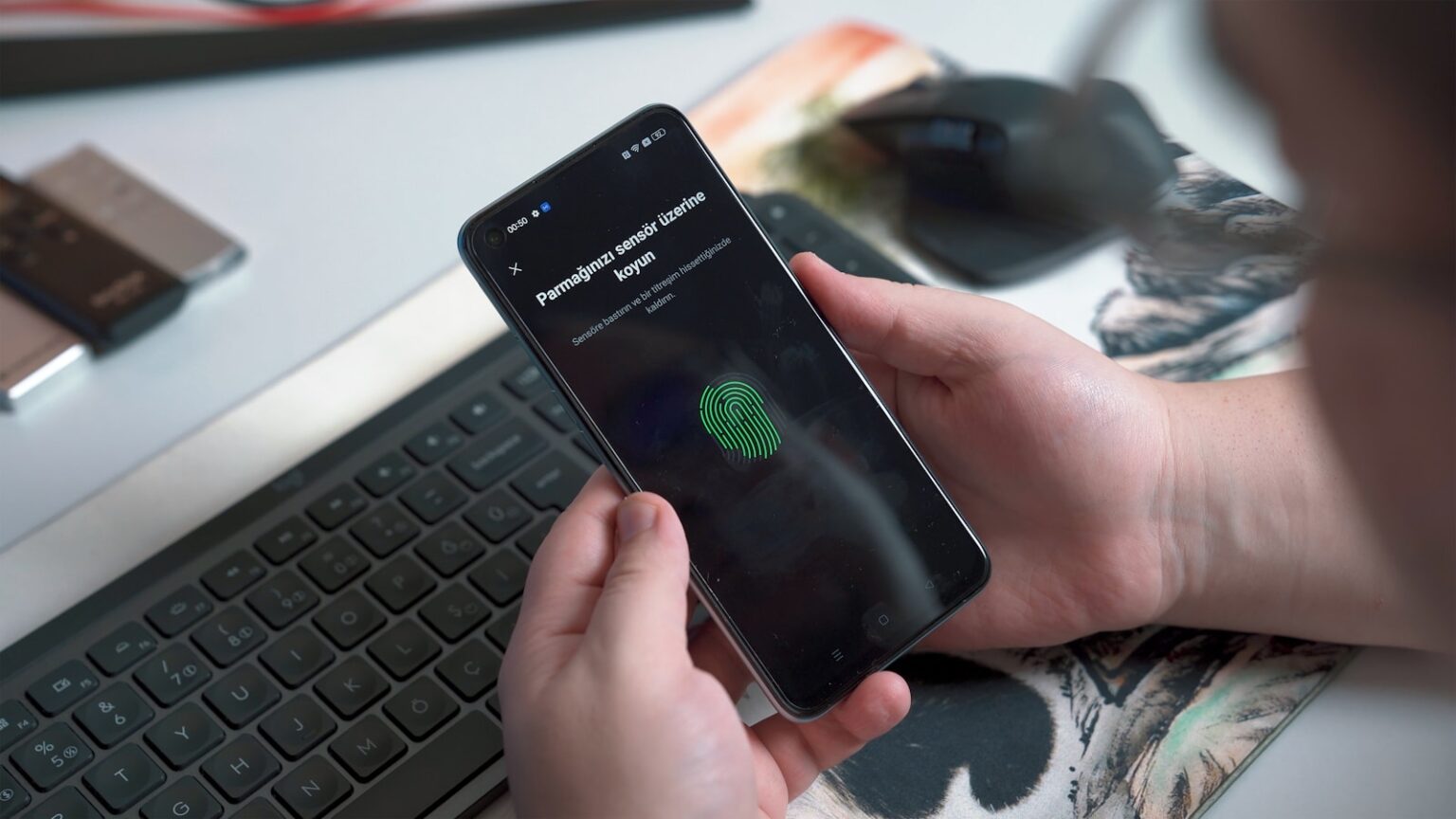
Utilizing fingerprint patterns provides a reliable method for confirming personal recognition due to their uniqueness and permanence throughout an individual’s lifetime. Careful collection and analysis of these ridge details enable precise matching, reducing false acceptance rates in security systems.
DNA profiling offers the highest specificity among natural markers, serving as a definitive approach to individual differentiation. Laboratories employ polymerase chain reaction (PCR) techniques to amplify genetic segments, facilitating comparison even from minimal biological material with exceptional accuracy.
Voice characteristics present an accessible yet complex means of recognition, influenced by vocal tract anatomy and speech dynamics. Advanced signal processing algorithms can extract distinctive features such as pitch, tone, and cadence to authenticate users in real-time scenarios.
Iris scanning captures intricate patterns formed in the colored ring surrounding the pupil. These textures remain stable over time and resist environmental damage, making iris-based systems effective for secure access control through high-resolution imaging and pattern matching methods.
Biometric authentication: biological identity verification
Utilizing the iris as a unique human feature provides one of the most precise methods for confirming personal recognition. Iris scanning relies on capturing intricate patterns in the colored part of the eye, which remain stable throughout an individual’s life. Compared to other techniques, iris-based systems achieve false acceptance rates as low as 0.0001%, making them highly reliable for access control and secure transactions.
Voice recognition offers an alternative approach by analyzing vocal tract characteristics and speech patterns. This method excels in remote or contactless scenarios but faces challenges from ambient noise and voice mimicry attacks. Advanced algorithms combining spectral analysis with machine learning can mitigate some vulnerabilities, providing continuous confirmation of user presence during interactions.
Exploring DNA and other physiological markers for confirmation
DNA profiling remains the definitive standard for distinguishing individuals at a molecular level. Despite its unparalleled specificity, practical deployment in everyday verification is limited due to sample collection complexity and processing time. However, ongoing research aims to develop rapid DNA sequencing technologies suitable for real-time applications without compromising accuracy or privacy.
Fingerprint recognition continues to be widely implemented due to ease of acquisition and mature technology ecosystems. It captures ridge patterns unique to each person, enabling swift identification with error rates often below 0.1%. Nonetheless, surface damage or contamination can reduce reliability, prompting hybrid solutions combining multiple biological traits.
- Iris scanning: Utilizes near-infrared imaging to highlight detailed eye structures resistant to aging effects.
- Voice pattern analysis: Employs acoustic signal processing techniques adapted for varying environmental conditions.
- DNA fingerprinting: Leverages genetic markers with high discrimination power, primarily used in forensic contexts.
The integration of these modalities into blockchain frameworks enhances transaction security by linking a user’s unique physiology directly with decentralized ledgers. For example, storing hashed representations of biometric templates on-chain allows immutable proof of legitimacy without exposing sensitive raw data. Such approaches elevate trust levels while maintaining confidentiality within distributed networks.
A systematic approach involves evaluating environmental factors affecting each method’s performance followed by iterative calibration using representative datasets. Experimental setups might include collecting iris images under varied lighting conditions or capturing voice samples across diverse acoustic environments to assess robustness quantitatively. These investigations help optimize algorithms tailored to specific use cases within cryptographic identity management systems.
The convergence of physiological measurement techniques with blockchain protocols invites further experimentation on securing templates through homomorphic encryption or zero-knowledge proofs. Such methodologies allow verification computations without revealing underlying biometric details, preserving anonymity while strengthening authentication guarantees across decentralized applications.
Fingerprint scanning accuracy factors
Accuracy in fingerprint recognition systems is primarily influenced by sensor quality, environmental conditions, and user-specific characteristics. High-resolution optical or capacitive sensors capture minutiae points more precisely, which directly enhances matching performance. For instance, sensors with resolution above 500 dpi tend to reduce false rejection rates significantly compared to lower-resolution devices.
Environmental variables such as moisture, dirt, and temperature can alter fingerprint ridge patterns and degrade scanner output quality. Experimental studies demonstrate that dry or oily skin reduces sensor reflectivity, increasing false non-match occurrences. Implementing adaptive image enhancement algorithms can partially mitigate these effects by normalizing input data.
Technical factors affecting fingerprint scan precision
The physiological condition of the finger impacts scanning outcomes notably. Scar tissue, cuts, or worn ridges from manual labor complicate pattern extraction algorithms. Comparative analysis between fingerprint and alternative modalities like iris or voice recognition reveals different resilience levels; iris scanning remains stable under physical damage but requires specialized hardware.
Matching algorithms play a crucial role in determining system reliability. Minutiae-based methods extract ridge endings and bifurcations for template creation; however, their sensitivity to distortion varies. Recent implementations incorporate machine learning models trained on large biometric datasets to improve tolerance against partial prints and rotation misalignments.
Interoperability with other forms of biological verification enhances overall identity confirmation robustness. Multi-modal approaches combining fingerprint data with iris scans or voice samples significantly decrease error rates by cross-validating multiple sources of human-specific traits. Blockchain applications benefit from such layered verification by securing digital identities through diversified proof mechanisms.
A focused experimental approach involves collecting fingerprint samples under varied controlled conditions–changing humidity levels, applying pressure variations–to quantify system response curves. Such practical investigation guides iterative refinement of both hardware parameters and software thresholds tailored to specific use cases like secure cryptocurrency wallets or blockchain node access controls.
This scientific methodology extends naturally into exploring synergy between distinct human trait verifications, encouraging hands-on trials with combined datasets (fingerprint plus iris or voice). Observing how multi-trait fusion algorithms resolve conflicts promotes deeper understanding of identity establishment in decentralized ledger environments. Active experimentation empowers developers and analysts alike to optimize biometric implementations for security-critical applications without compromising usability.
Facial Recognition Implementation Challenges
Implementing facial recognition systems confronts significant hurdles related to the accurate extraction and comparison of complex physiological markers such as iris patterns, fingerprint ridges, and DNA-derived data. These traits exhibit high individual uniqueness but require advanced imaging technologies and precise algorithms for reliable analysis. For instance, variations in lighting, camera resolution, and angles often degrade the quality of captured facial metrics, complicating the process of matching these against stored records. This necessitates multi-modal approaches that integrate complementary features like iris scans or fingerprint templates to reduce false positives and negatives during user confirmation.
Another technical limitation arises from the dynamic nature of human features over time–aging effects modify skin texture and facial contours, which can hinder consistent recognition performance. In biometric systems relying solely on face geometry or texture, such temporal changes introduce verification errors unless adaptive learning models are employed. Experiments with longitudinal datasets reveal that combining static identifiers such as fingerprint minutiae with dynamic facial traits enhances long-term accuracy. Furthermore, integrating genetic markers like DNA sequences remains largely impractical due to invasive sampling methods and processing delays incompatible with real-time identity checks.
Operational Constraints and Data Integrity
Operational deployment of face-based recognition tools must address environmental factors including variable illumination conditions, occlusions caused by accessories or masks, and motion blur during capture. Laboratory testing shows that controlled lighting setups improve data fidelity significantly; however, real-world scenarios rarely permit such regulation. Implementing infrared imaging targeting the iris can mitigate ambient light issues but introduces additional hardware costs and complexity. Moreover, maintaining the integrity of fingerprint or iris databases is critical–data corruption or unauthorized access risks compromising authentication reliability across distributed networks.
The integration of these physical trait analyses with blockchain frameworks offers promising avenues for secure and immutable record-keeping but also presents challenges in scalability and privacy preservation. Storing sensitive biological templates on decentralized ledgers demands encryption schemes resistant to quantum attacks while enabling efficient retrieval for identity validation processes. Experimental prototypes demonstrate hybrid architectures where hashed biometric signatures rather than raw images are recorded on-chain to balance transparency with confidentiality requirements. Continuous research into error correction codes and template protection mechanisms will be essential for advancing trustworthy verification infrastructures.
Voice Biometrics Security Risks
Voice recognition systems present distinct vulnerabilities compared to other biological markers such as iris scans, fingerprint analysis, or DNA profiling. Unlike static traits that remain largely unchanged over time, vocal characteristics can be mimicked or manipulated using advanced synthesis and playback techniques. This susceptibility demands rigorous scrutiny when integrating voice-based verification into secure environments.
Studies demonstrate that voice samples can be captured remotely without the subject’s knowledge, enabling attackers to execute replay attacks or generate synthetic audio through deep learning models. While iris and fingerprint recognition rely on physical presence and direct sensor interaction, voice authentication is more exposed to interception across communication channels.
Technical Challenges in Voice Verification Security
One primary risk arises from the ease of collecting voice data via common devices such as smartphones or VoIP calls. Attackers may employ high-quality recordings combined with signal enhancement algorithms to bypass systems designed to detect live human speech patterns. This contrasts with DNA or fingerprint acquisition methods requiring direct contact, inherently limiting unauthorized data harvesting.
Research published by cybersecurity labs highlights that state-of-the-art voice synthesis tools like WaveNet or Tacotron 2 can produce convincingly authentic vocal imitations. These AI-generated samples often evade traditional liveness detection mechanisms employed in verification protocols. Consequently, relying solely on vocal traits increases exposure to spoofing attacks unless supplemented with multi-factor approaches.
Integrating cross-modal security measures–such as combining voice checks with fingerprint scanners or iris recognition–significantly reduces fraud potential. For instance, blockchain-based identity frameworks increasingly adopt layered validation schemes where biometric inputs are hashed and stored securely to prevent tampering. Experimental deployments reveal improved resilience against impersonation attempts when multiple biological identifiers are validated concurrently.
The dynamic nature of vocal biometrics also complicates threshold calibration for false acceptance and rejection rates. Environmental noise, health conditions affecting speech, and emotional state introduce variability absent in other biological identifiers like fingerprints or iris patterns. Such fluctuations necessitate adaptive algorithms capable of distinguishing legitimate changes from fraudulent attempts without compromising user convenience.
A progressive experimental approach involves testing voice authentication systems against synthesized attack scenarios within controlled labs. Researchers simulate varied acoustic environments while employing adversarial neural networks trained to generate deceptive audio inputs. Continuous iteration refines detection heuristics leveraging spectral analysis and behavioral cues unique to genuine speakers. These findings pave a pathway for robust solutions that complement existing multi-factor identity confirmation technologies rather than replacing them outright.
Iris Scan Integration Methods
Implementing iris recognition technologies requires precise optical capture and robust algorithmic processing to ensure reliable verification. The most effective integration method involves near-infrared imaging combined with advanced pattern-matching algorithms that analyze the unique texture of the iris. This approach minimizes interference from ambient lighting and pupil dilation, enhancing accuracy compared to visible-light scanners. Incorporating multispectral sensors further improves image quality by capturing different wavelengths, enabling differentiation between the iris and surrounding ocular features.
Combining iris data with other physiological markers such as fingerprint or voice patterns enhances overall system resilience against spoofing attacks. For instance, multimodal systems utilize synchronized acquisition devices to collect fingerprint ridges alongside iris scans, creating layered security profiles. Voiceprint analysis can be simultaneously integrated through microphone arrays, aligning vocal biometrics with ocular features for continuous user confirmation. These hybrid architectures leverage complementary characteristics of DNA-level uniqueness in iris textures alongside dynamic behavioral traits like speech modulation.
Technical Approaches to Iris Scan Implementation
Image acquisition modules typically employ charge-coupled device (CCD) or complementary metal-oxide-semiconductor (CMOS) sensors optimized for near-infrared wavelengths around 700-900 nm. Captured images undergo preprocessing steps including normalization, segmentation of the iris from eyelids and eyelashes, and noise reduction. Feature extraction algorithms apply Gabor wavelet transforms or deep convolutional neural networks (CNNs) to encode distinctive patterns into compact templates suitable for cryptographic hashing on blockchain ledgers.
Integration of these templates into distributed ledger technology ensures tamper-evident storage and decentralized verification without exposing raw biometric data. This method aligns with privacy-by-design principles, allowing entities to confirm user authenticity through zero-knowledge proofs derived from iris pattern hashes rather than direct data sharing. Experimental deployments have demonstrated reduced false acceptance rates below 0.001% when combining iris scans with DNA-based identity anchors embedded within blockchain smart contracts.
Emerging research explores adaptive learning models where continuous updates refine matching thresholds based on real-time environmental variables such as head pose or partial occlusions caused by eyelid movement. Laboratories conducting comparative studies reveal that integrating infrared-based fingerprint readers alongside iris scanners reduces failure-to-enroll incidents by approximately 15%, especially in populations with darker pigmentation where melanin absorption impacts scan clarity. Such empirical findings advocate for multi-sensor fusion frameworks incorporating ocular and dermatoglyphic inputs to strengthen secure access control mechanisms.
Conclusion on Multimodal Systems Utilization
Deploying multiple verification modalities such as fingerprint, iris scanning, and voice recognition significantly enhances security by reducing false acceptance and rejection rates inherent in single-method approaches. Integrating DNA-based markers alongside traditional traits creates a robust layer of confirmation that is resistant to spoofing and circumvention, vital for high-stakes environments requiring stringent user validation.
Experimental data reveals that combining distinct biological features improves system resilience against environmental noise, sensor variability, and presentation attacks. For instance, a fusion algorithm weighing fingerprint minutiae with voice pattern dynamics can adaptively adjust confidence thresholds, optimizing both throughput and precision in real-time scenarios.
- Fingerprint analysis: Provides rapid initial screening with established global standards and extensive datasets supporting machine learning enhancement.
- Iris recognition: Offers high uniqueness due to complex iris patterns; effective under varied lighting but sensitive to alignment.
- Voice identification: Adds a behavioral dimension capturing speaker-specific vocal tract characteristics; vulnerable to mimicry without liveness detection.
- DNA profiling integration: Introduces immutable genetic identifiers, although currently limited by sample acquisition speed and privacy regulations.
The trajectory for future systems points toward seamless multimodal frameworks embedded within blockchain-enabled platforms to create tamper-resistant audit trails of verification events. This convergence promises enhanced trust models where cryptographic proofs link physical biometric evidence with decentralized ledgers, enabling transparent yet privacy-preserving authentication workflows.
Pursuing iterative experimentation combining these factors will refine adaptive algorithms capable of real-time decision-making across heterogeneous input streams. Researchers should explore cross-modal correlation coefficients and error distribution patterns to quantify synergistic gains effectively. Such investigations will illuminate optimal configurations tailored for diverse application domains including financial transactions secured by blockchain consensus mechanisms or access control in critical infrastructure.
This multi-sensor approach not only fortifies resistance against sophisticated forgery attempts but also paves the way for personalized security protocols aligned with evolving regulatory landscapes. Continued exploration into hybrid models integrating physiological signals with cryptographic identity anchors could unlock unprecedented levels of assurance–thereby transforming how entities validate presence and consent within distributed digital ecosystems.