

The mainstream adoption of Web3 in 2026 is driving a complete structural overhaul of digital custody systems, moving the industry away from error-prone key management. For more than a decade, retail and corporate users were forced to manage complex 12-word seed phrases, where a single lost device or clipboard error resulted in permanent asset loss. To address these systemic usability issues, forward-thinking payment ecosystems like pay pilot are deploying advanced cryptographic infrastructures that completely separate identity from raw private keys. By leveraging native smart contract execution, modern Web3 portals allow organizations and retail users to interact with decentralized networks using intuitive, secure, and fully automated settlement pipelines.
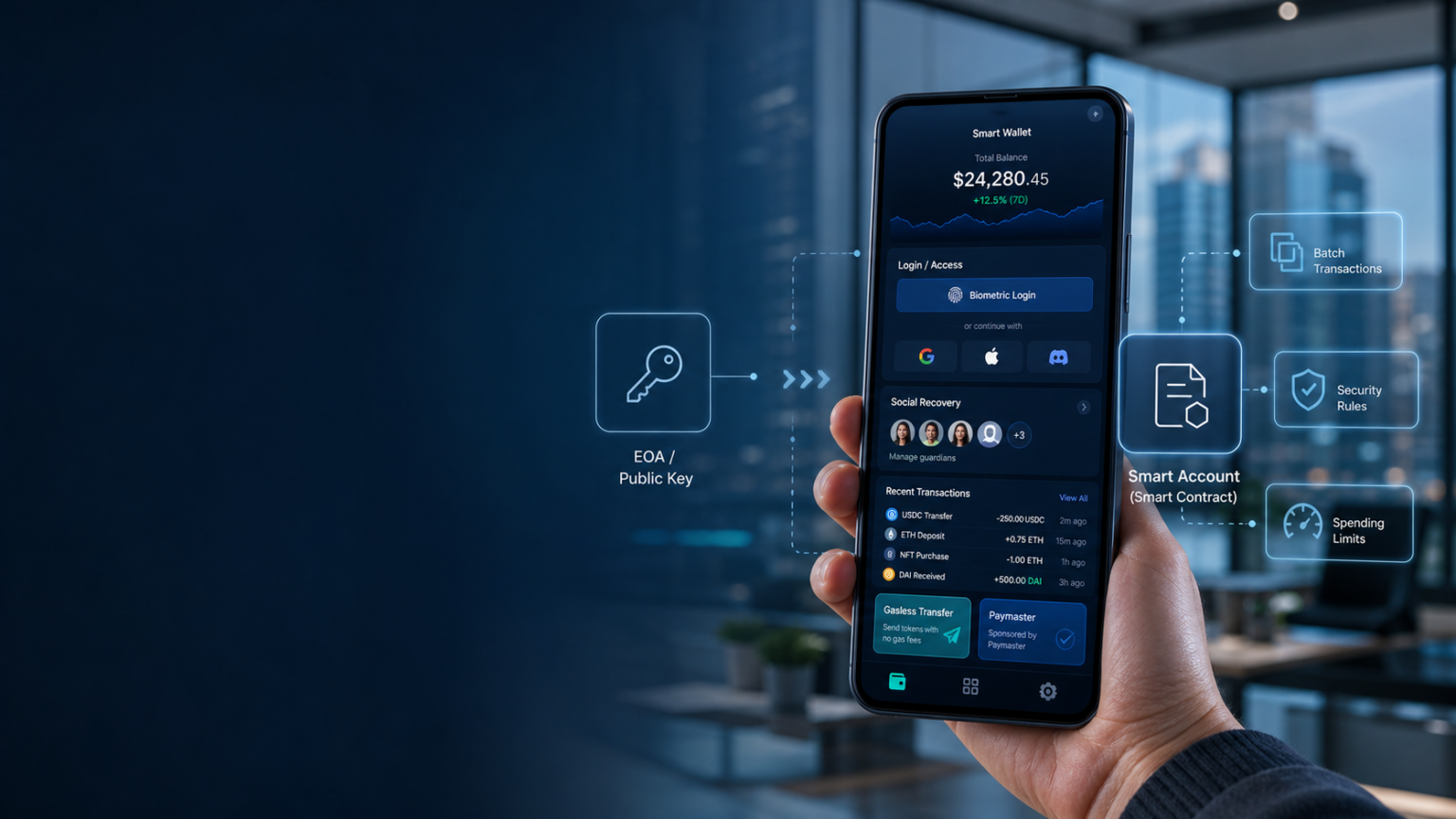
At the core of this user-experience revolution is the rapid maturity of the paypilot wallet architecture, which natively supports account abstraction. Traditional Externally Owned Accounts (EOAs) are being replaced by programmable smart accounts that can customize verification logic directly at the code level. By removing the strict requirement for users to hold native blockchain tokens for gas and enabling secure web2-like account recovery methods, this integrated design provides a critical bridge for non-technical users. It transforms digital wallets from basic physical locks into flexible, enterprise-ready smart accounts.
The Technical Mechanics of ERC-4337 and Account Abstraction
The structural foundation of this new paradigm is built on Account Abstraction, formalized via the ERC-4337 standard. This protocol decouples wallet control from consensus-layer constraints, converting standard public-private key pairs into fully programmable smart wallets. Instead of standard transaction routes, users sign pseudo-transaction objects called UserOperations that capture their cryptographically signed intentions. These objects bypass the traditional mempool, flowing instead through a parallel validation loop before they are processed.
To coordinate these on-chain executions, specialized network nodes known as Bundlers collect UserOperations and package them into standard blockchain transactions. These bundled packages are then sent to a centralized, canonical EntryPoint smart contract for unified validation and execution. By utilizing this multi-step processing stack, developers can easily integrate advanced features such as multi-signature authorization and session keys. This modular programmability is further standardized under the ERC-7579 interface, allowing merchants to install customized, plug-and-play wallet security modules.
Gas Sponsorship and Paymasters: Eliminating the Native Token Barrier
For mainstream retail users, managing native gas tokens on multiple blockchain networks has always been a significant friction point. Account abstraction eliminates this requirement through the introduction of Paymasters, which act as specialized transaction-fee managers. Paymasters can automatically sponsor user gas fees in the background, allowing decentralized applications (dApps) to provide a completely gasless onboarding experience. This feature ensures that users can interact with Web3 protocols without ever having to buy or hold native network tokens.
In cases where a business does not sponsor transaction fees, Paymasters enable comprehensive gas abstraction. This allows users to settle their gas costs using standard ERC-20 stablecoins like USDC or USDT rather than volatile network assets. A company can execute B2B transfers and smart payouts using their operating stablecoin balances directly. This eliminates the need for complex multi-token treasury management and drastically simplifies corporate bookkeeping.
Keyless Onboarding and Social Recovery Safeguards
Beyond optimizing transaction fees, programmable wallets solve the single greatest vulnerability of digital custody: seed phrase loss. By utilizing social recovery mechanisms, smart wallets eliminate the terrifying reality of losing all funds due to a misplaced piece of paper. Users can designate trusted “guardians”—which can be hardware devices, friends, family, or regulated institutions—to help restore account access. If a primary recovery device is lost, a consensus of these guardians can secure a deterministic key rotation.
This advanced custody framework is seamlessly combined with signature abstraction to enable biometric authentication like FaceID, TouchID, and Passkeys. Rather than typing out complex passwords or signing incomprehensible hex strings, transactions are authorized with a simple biometric scan. This mimics the intuitive simplicity of modern mobile banking apps while retaining the strict sovereignty of decentralized, non-custodial networks. It successfully positions Web3 applications to capture mainstream trust.
EIP-7702 and the Hegota Roadmap: Solving the Relay Dilemma
The technological landscape in 2026 is also being accelerated by EIP-7702, which brings native account abstraction directly to legacy wallets on Layer-1. This protocol allows existing Externally Owned Accounts to temporarily delegate their control to smart contracts, providing legacy users with modern gas sponsorship and social recovery features. However, as smart accounts scale, Ethereum co-founder Vitalik Buterin has warned of structural “relay dependency.” Currently, smart contract transactions rely heavily on centralized third-party relays for on-chain inclusion, creating potential centralization chokepoints.
To address this fragility, the Ethereum developer community is actively designing the late-2026 Hegota upgrade. This transition aims to integrate native account abstraction through EIP-7701 and introduce new mempool designs like FOCIL (Forward Inclusion Lists) to ensure absolute censorship resistance. By rebuilding the public mempool to support native smart contract execution, the network will completely eliminate relay vulnerabilities. This ongoing roadmap guarantees that corporate and retail digital wallets remain robust, decentralized, and globally accessible.
Establishing the Future of Web3 Usability
The rapid evolution of Web3 infrastructure demonstrates that usability and institutional-grade security are no longer mutually exclusive. By converting wallets into programmable smart contracts, account abstraction is dismantling the technical barriers that have slowed down mass adoption. Organizations that deploy modular smart wallets are drastically reducing transaction friction and improving operational safety. This technological leap represents the definitive blueprint for the future of global digital commerce.